Stretch Packaging Advisor
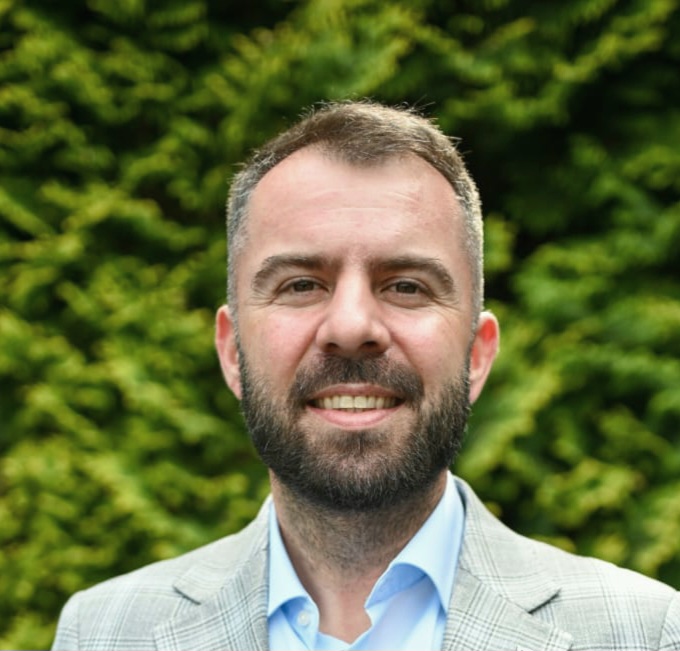
My name is Paweł Chrapowicki. Two decades in the stretch film industry have shown me how often companies stick to outdated patterns, limiting their path to efficiency and true load stability. As a technical advisor, I implement standards that significantly reduce material consumption and costs while strengthening pallet structure and eliminating the risk of claims. My goal is to demonstrate that savings do not have to mean compromise – I combine economic efficiency with absolute transport safety.
Contact me →
Have you experienced situations where pallet stability was a challenge?
Do you agree that reducing film thickness can affect load safety?
Would you like to reduce film consumption in a controlled and safe way?
Do you think it is worth measuring load stability to avoid losses and claims?
Would you like to see real examples of savings without compromising safety?
Packaging Reliability Consultant
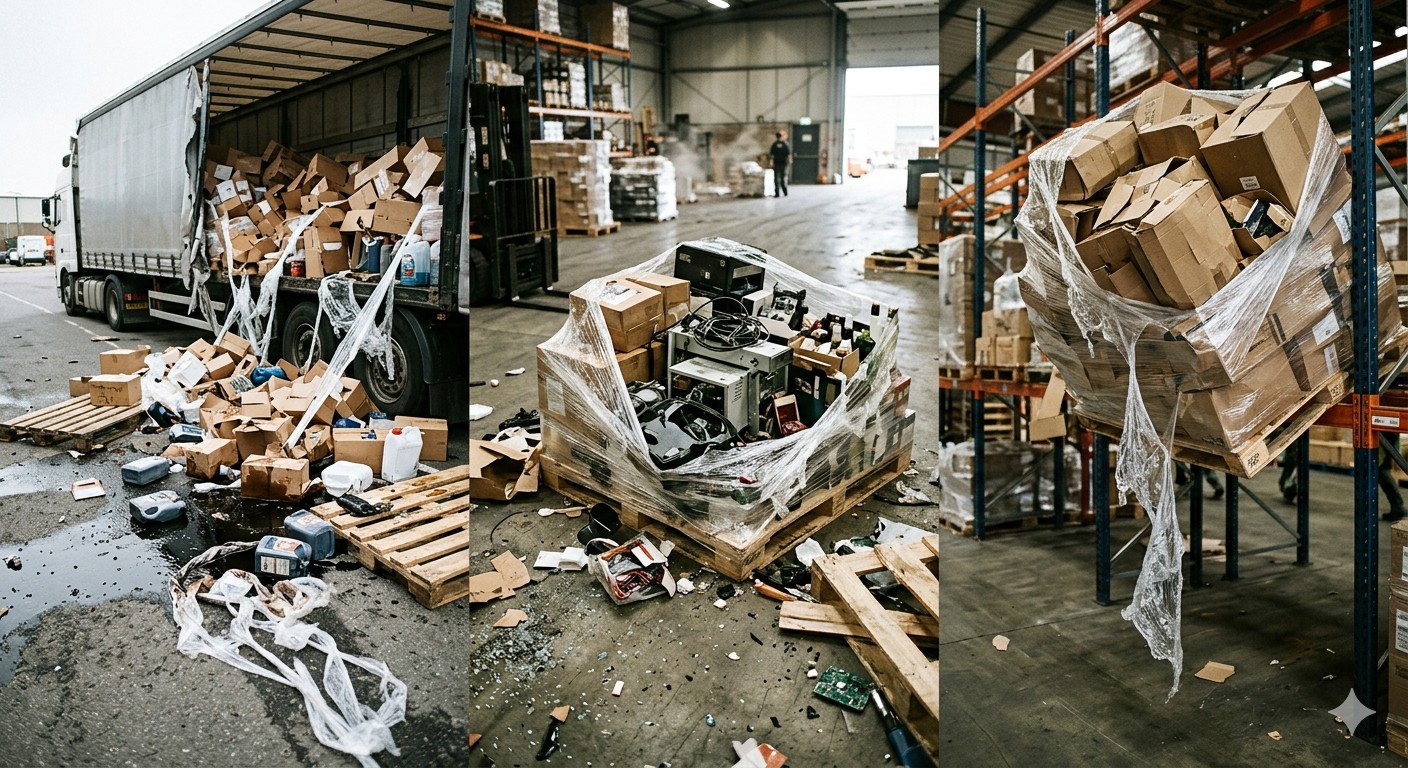
Companies rarely call because they want to buy stretch film. They call when the problem is already hurting — and previous solutions have failed.
This is where I work best. Not as a supplier. Not as a salesman. But as a Transit Damage Prevention Specialist — engineer focused on load safety, transport stability, complaint prevention, and operational control.
When packaging fails — I step in.
Sound familiar?
What I solve
The rule: diagnosis before prescription — always
I identify where and why the problem occurs before recommending anything.
Data replaces assumptions. If it is not measured, it cannot be controlled.
Corrective action plan: load safety standards, machine settings, film specification — implemented and documented.
The solution is only real if the problem does not return. I verify that it holds.
The wrong question
"How much does the film cost?"
"Where can I find a lower price per kilogram to reduce packaging costs?"
The right question
"How much does one damaged pallet cost?"
"What is the cost of repeated complaints and lost customer trust?"
Technical Specialisation
Stretch hood at the end of the production line is a critical component — custom-engineered quality cannot be replaced by a material from shelf, like stretch film. I specialise in stretch hood consultancy tailored to specific process needs: from packaging engineering at the manufacturer, through pallet stability testing, to replicating application parameters at the customer's site.
I work directly with the producer's technologist and load stability testing centre, building solutions based on data, not assumptions. I support film selection — including 35% PCR materials compliant with PPWR and ultra-thin 20 µm films for light loads — because the final result depends on the entire end-of-line system, not price per kilogram.
Service & Machines
I have access to commercial service support for stretch hood packaging machines: settings optimisation, diagnostics, and line refurbishment.
We buy used stretch hood machines
If you have an idle or end-of-life hooder that needs replacing — get in touch.
Stretch Hood — advisory scope
Thickness, technology, 35% PCR, 20 µm films for light loads — matched to the specific process and transport requirements.
Comprehensive solution design, stability testing, and EUMOS certification – all performed at a single testing center.
Machine setting optimisation, diagnostics, line refurbishment. We also buy used machines.
Technological progress
Standard 23-micron stretch film at 150% pre-stretch is last-century technology. Fax machines and pagers once worked too. Today, high-performance multilayer films deliver better holding force and puncture resistance — using up to three times less material. But packaging is not just film. It is a system: the wrapper, the film, wrapping parameters, and load geometry. Every element affects cost and safety.
Most packaging purchasing decisions are made at the wrong level — by procurement, based on price and film description. But the real cost of poor packaging is paid by operations and logistics: through complaints, damage, downtime, and lost customers.
How I work
I advise and solve problems. I do not guess — I measure. I do not take risks — I test.
I go to the production line, check the wrapping machine settings, analyse the packaging process and load stability. I deliver specific numbers and solutions — not general recommendations.
My role is to move up — from product level to business risk level — and become the person you consult before making a decision.
My Role. What I do. How I advise.
S.T.A.B.L.E.
Framework
Transport Safety & Load Reliability
I standardise load securing to eliminate variability and operational errors. I restore control and predictability to the transport process.
P.R.I.M.E.
Model
Unit Load Risk & Performance
I manage load risk and quality. I connect measurements and analysis into a system that enables decisions at both operational and executive level.
F.O.R.C.E.
Method
Load Stability Optimisation Architect
I engineer load stability. I optimise film application and process control to achieve the required containment force with minimum material usage.
P.A.C.E.
System
Load Performance & Cost Optimisation
I reduce packaging costs. I eliminate overwrapping and hidden losses by linking load stability with real TCO and measurable financial outcomes.
One way of working
I turn unstable and costly packaging processes into predictable systems: eliminating operational chaos (S.T.A.B.L.E.), enabling data-driven decisions (P.R.I.M.E.), engineering effective technical solutions (F.O.R.C.E.), and converting them into measurable cost savings (P.A.C.E.).
I do not compete for an order. I enter at the level of problem definition — before anyone decides which film to buy. Whoever defines the problem controls the solution.
Let's talk →Methodology
A short conversation about the process — not the product. I diagnose current problems and then find the room for improvement before proposing any action. Respecting your time — and mine.
I check the film type, wrapping machine settings, load stability, and material consumption. This is not a "presentation meeting" — it is work with data at the machine. The result: we know exactly where the money is leaking and what can be improved.
Precise data: comparison of current and optimised consumption, savings simulation (min. 10%), monthly and annual cost analysis, and environmental impact assessment. Decisions based on facts, not assumptions.
Sample testing under real production conditions, solution homologation, supply chain security. Result: a new operational standard with confirmed ROI.
What I cover as an advisor
Selection of film quality tailored to the load characteristics enables lower costs and reduced material consumption.
Measurement of pallet stability. A load that arrives without damage and without excessive use of plastic.
Transition to 35% recycled content and meeting new EU regulations without operational losses.
Access to leading global stretch film manufacturers. Supplier selection matched to your requirements.
Stretch hood system configuration adapted to logistics requirements and automation needs.
High-performance stretch films, modern technologies, advanced mechanical properties.
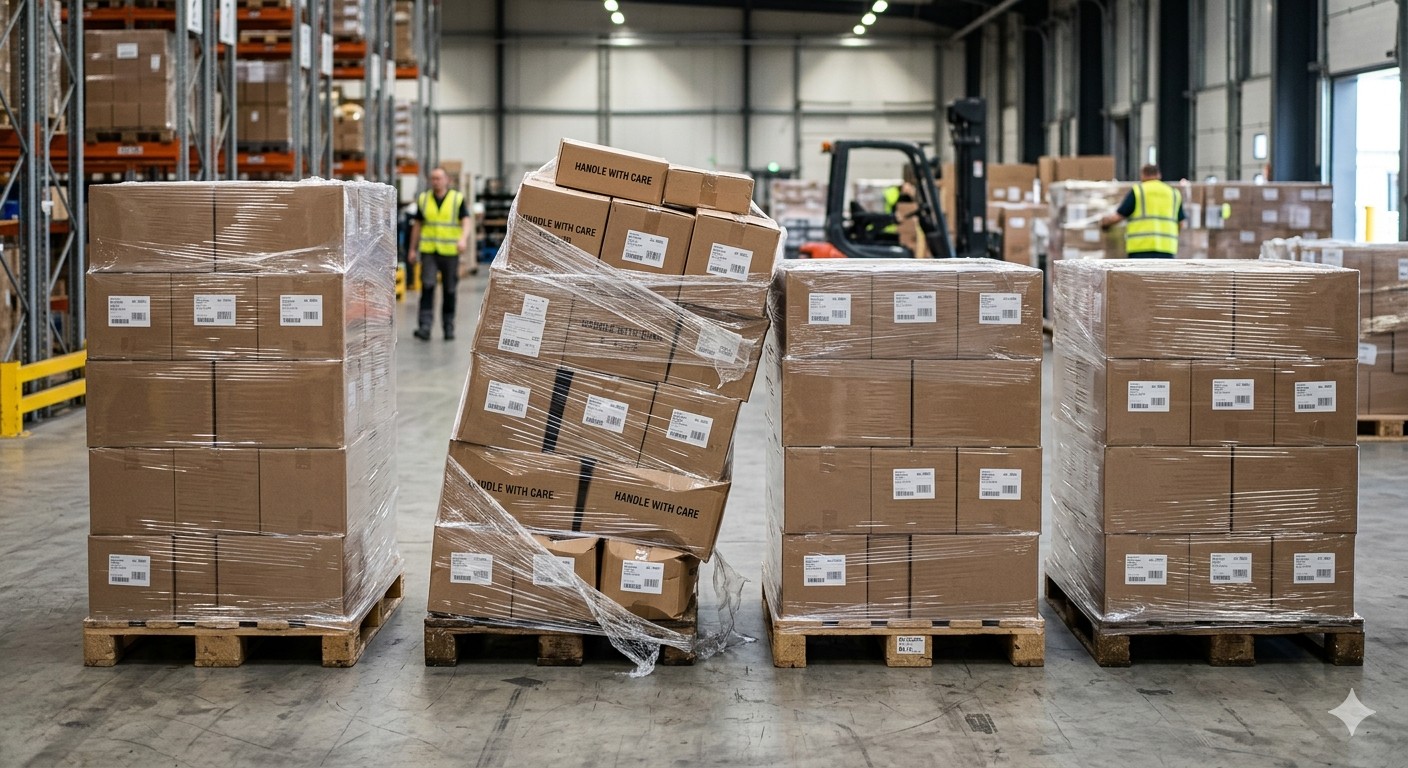
Stretch film is often misunderstood as a protective layer — its real function is structural load stabilisation. It integrates the load into a single transport unit, ensuring stability from dispatch to destination.
Six pillars, that separate professional packaging from guesswork.
Packaging performance is not defined by the film alone, but by the interaction between film, wrapper settings, and load geometry. True optimisation requires system-level alignment — not component replacement.
Load holding force is the key safety parameter — the appearance of the wrap is irrelevant if the pallet loses stability and shifts during braking or cornering. If this parameter is not measured, it is not controlled and guaranteed.
Proper stretching of stretch film within the plateau region of the stretch curve (around 80% of its guaranteed elongation) permanently orients LLDPE polymer chains, limits their return to a coiled structure, and ensures stable, controlled load containment force without shrink-back or loss of pallet stability.
To ensure permanent load stability, stretch film must be stretched beyond the plateau region of the stretch curve, where polymer macromolecules become oriented and long-term force retention is activated. This enables the material to generate stable, long-lasting containment force, effectively preventing load loosening during dynamic transport stresses.
Load stability should be verified through static or dynamic testing in accordance with the EUMOS 40509 standard, which defines acceptable load deformation limits and evaluates the ability to maintain load integrity during transport. Assumptions without measurement do not guarantee safety, only validated test results confirm resistance to dynamic transport conditions.
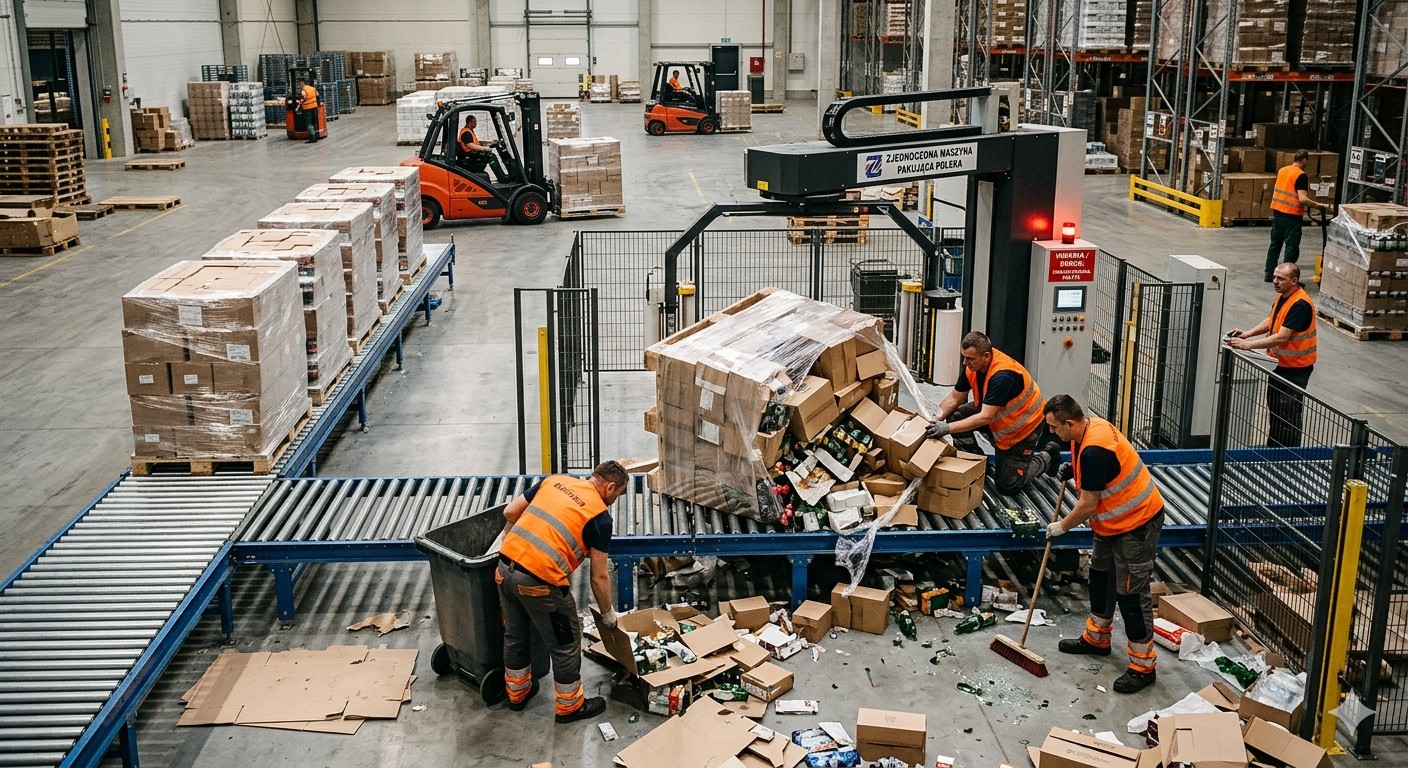
Most transport damage results from insufficient load securing and its disintegration during transit — every claim generates logistics costs, material losses, and loss of customer trust. Cost reduction has limits — safety must be measured and controlled.
Load stability is the result of understanding the entire packaging process, not the selection of stretch film.
Philosophy of working with end customers
Beyond direct work with end users, I partner with manufacturers, distributors, and sales teams to build systems that turn technical knowledge into competitive advantage.
The strategy for increasing sales team effectiveness through knowledge, tools, and processes. Training, coaching, and proprietary calculators that allow salespeople to lead conversations based on data and value — not intuition and price. Result: higher team performance, shorter onboarding, measurable expert led sales.
The operational system for implementing strategy and accelerating results. It connects packaging technology with sales engineering, turning technical data into real results — including interim management execution, process optimisation, and change management.
Sales Enablement gives teams the competencies and tools. Business Catalyst delivers the implementation, pace, and results. Together they form a system where sales and processes operate as one mechanism — predictable, long-term, and focused on sustainable growth.
I help your team build expert identity and genuine confidence in what they offer.
When a salesperson becomes a customer's technical partner — sales become the natural result of the value delivered.
I believe knowledge multiplies through sharing. A candle loses none of its flame by lighting another, it only makes the world brighter and more stable.
Paweł Chrapowicki
Target groups
Professional identity
I work like a catalyst in a chemical reaction — improving processes and triggering better decisions. I do not interrupt. I diagnose. I challenge the status quo. My client chooses to work with an expert who structures the process, reduces uncertainty, and accelerates action.
I built my career from the ground up — from lab and quality control to working with the market and complex challenges in industrial packaging. With a background in chemistry, I understand materials and processes at a structural level, which allows me to create solutions rather than simply recommend products. Today, I focus on load stability, packaging cost optimisation, and applying knowledge that translates into real safety in logistics and risk reduction in transport.
Let us see what the data says about your packaging. If an audit confirms your process is fully optimised, you gain professional peace of mind. If we find room for improvement, we will work together to transform those losses into measurable profits.
Get in touch → Connect on LinkedIn →